For most of the twentieth century, the cheapest advertisement an American business could buy fit in a shirt pocket. A bar, a hotel, a pizza place or a salt company could print its name on a book of paper matches, hand them out by the thousand, and know that each one would sit on a nightstand, a dashboard or a kitchen table until the last match was gone. Then it went in the trash.
That is the whole reason these small pieces of design are worth looking at again. They were never meant to last. This page covers where the advertising matchbook came from, how it became a national habit, and why Chicago ended up as one of the places that made the most of them, and held on longest.
Where did the matchbook come from?
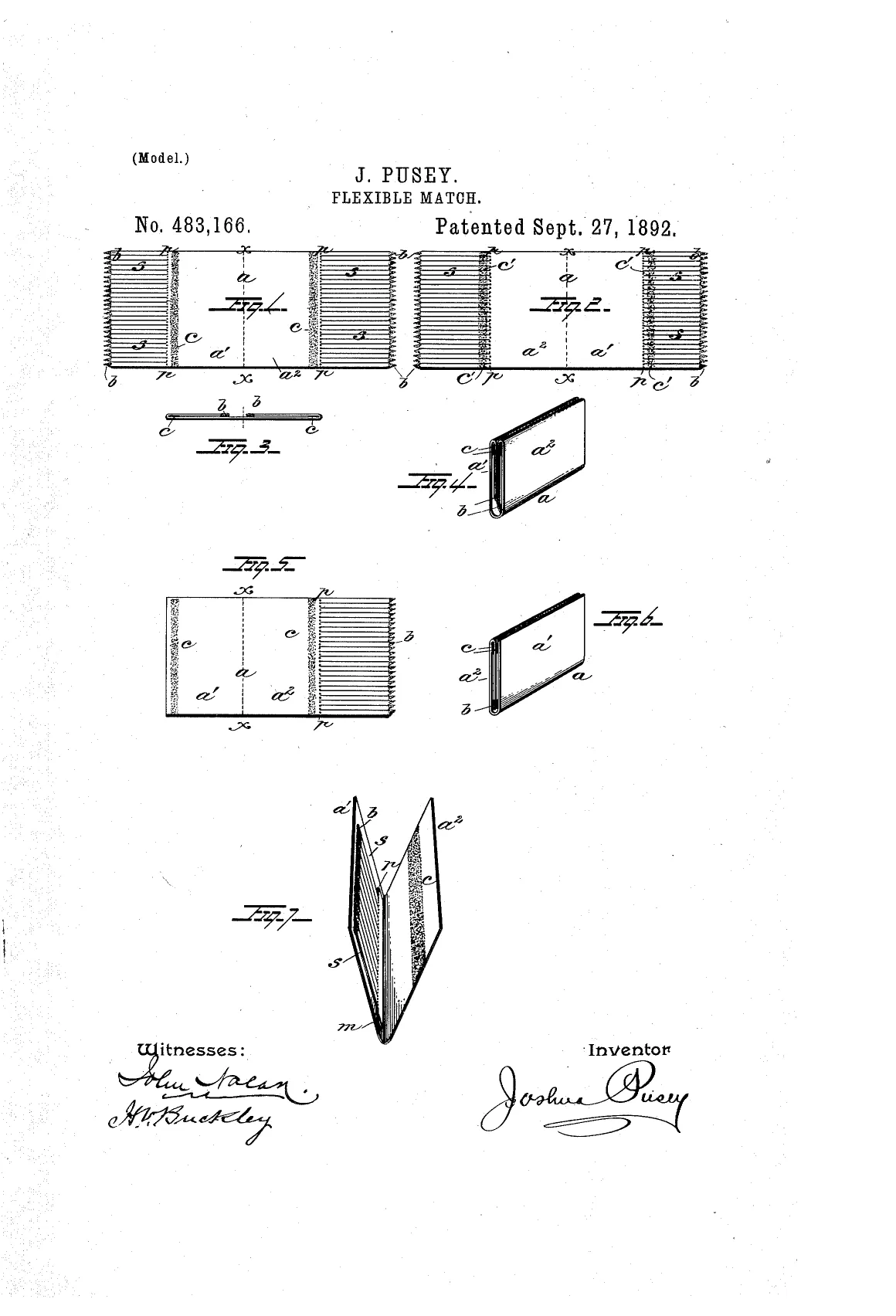
The book match began as a patent filing. On September 27, 1892, Joshua Pusey, a patent attorney in Philadelphia, received US Patent 483,166 for what he called a "flexible match": a row of paper matches stapled inside a folded cardboard cover.
Pusey's design had a flaw. The striking surface sat inside the cover, right next to the match heads, so one strike could light the whole book. Charles Bowman of Lebanon, Pennsylvania, patented a version with the striker on the outside soon after, and that is the matchbook people still recognize.
The patent rights passed to the Diamond Match Company in the mid-1890s (sources give 1894 or 1896), and Diamond became the first company to mass-produce paper matchbooks. Diamond already dominated wooden matches in the US, and it had a Chicago connection from the start: in 1896 a group of Chicago financiers ran up Diamond Match stock on the Chicago Stock Exchange from 120 to 248 in a few months. When the scheme collapsed that August, the exchange closed its doors rather than trade.
How did a book of matches become an advertisement?
The cover was blank paper, and blank paper is an invitation. Collectors usually credit a traveling theater troupe, the Mendelson Opera Company, with the first advertising matchbook: its manager bought a couple hundred blank books and had the cast hand-letter them with show information and paste on photos of the performers. The exact year is disputed (accounts range from 1889 to the mid-1890s), and only one copy is said to survive.
What turned the idea into an industry was a salesman. Henry C. Traute of Diamond Match is said to have landed an order for 10 million matchbooks from Pabst Brewing in Milwaukee around 1902, then sold tobacco magnate James B. Duke on another 30 million. Traute is also credited with the line printed on billions of covers since: "Close cover before striking."
One of the other early national advertisers was Chicago's own Wrigley, which put its chewing gum on matchbooks in the format's first decades.
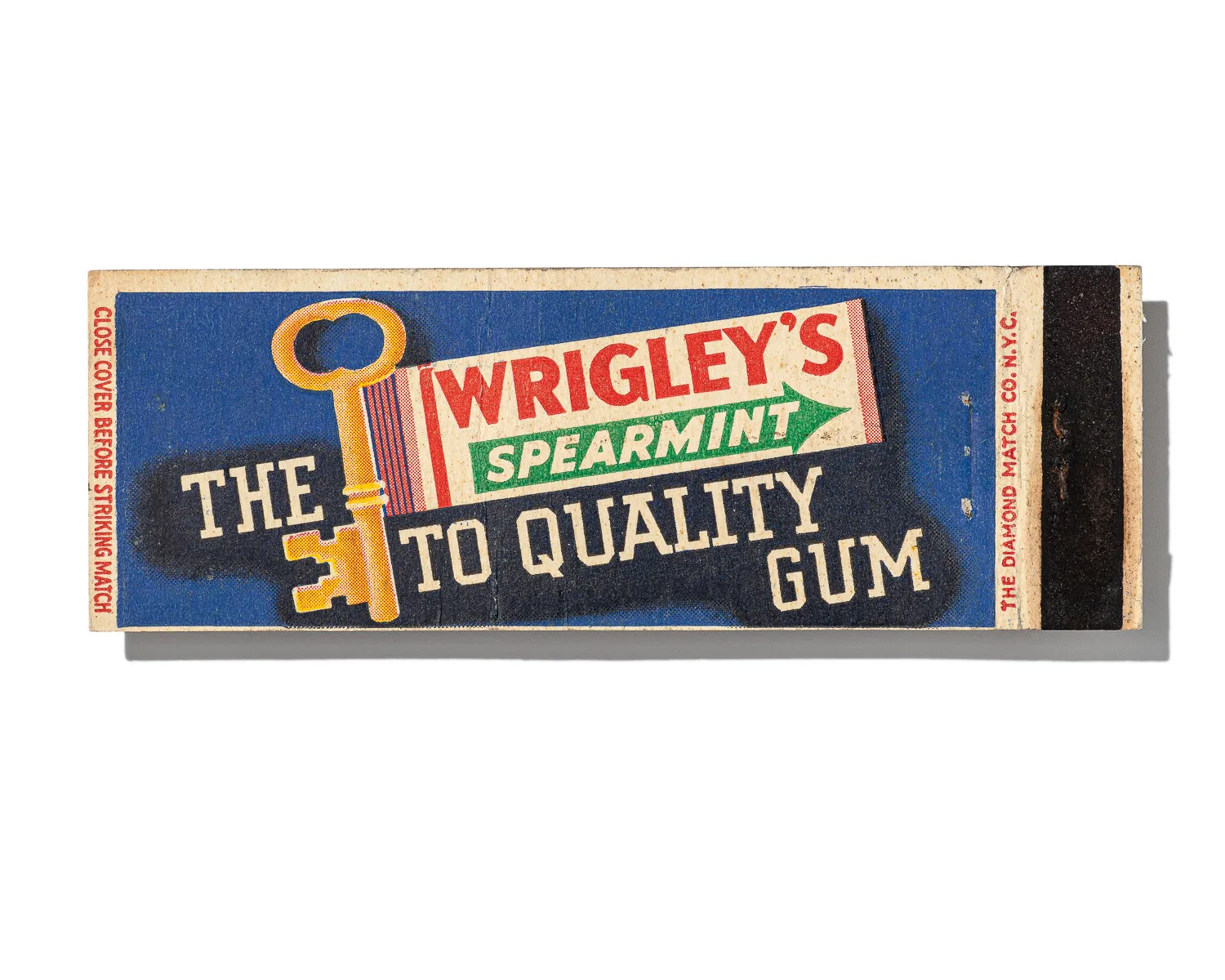
The economics explain the rest. A matchbook was something people needed every day, it was free to the customer, and it carried the advertiser's name into homes, cars and offices for days or weeks. In the matchbook's heyday, a small business could have 2,500 custom matchbooks printed for under $5. Diamond's own sales material called the matches in each book "20 little salesmen."
Why were matchbooks everywhere in the 1940s and 1950s?
Matchbook production peaked in the 1940s and 1950s. Smoking was common, nearly every public room had an ashtray, and handing out matches was simply what a business did. Hotels put them in every room. Restaurants set them by the register. Bars kept a bowl on the counter.
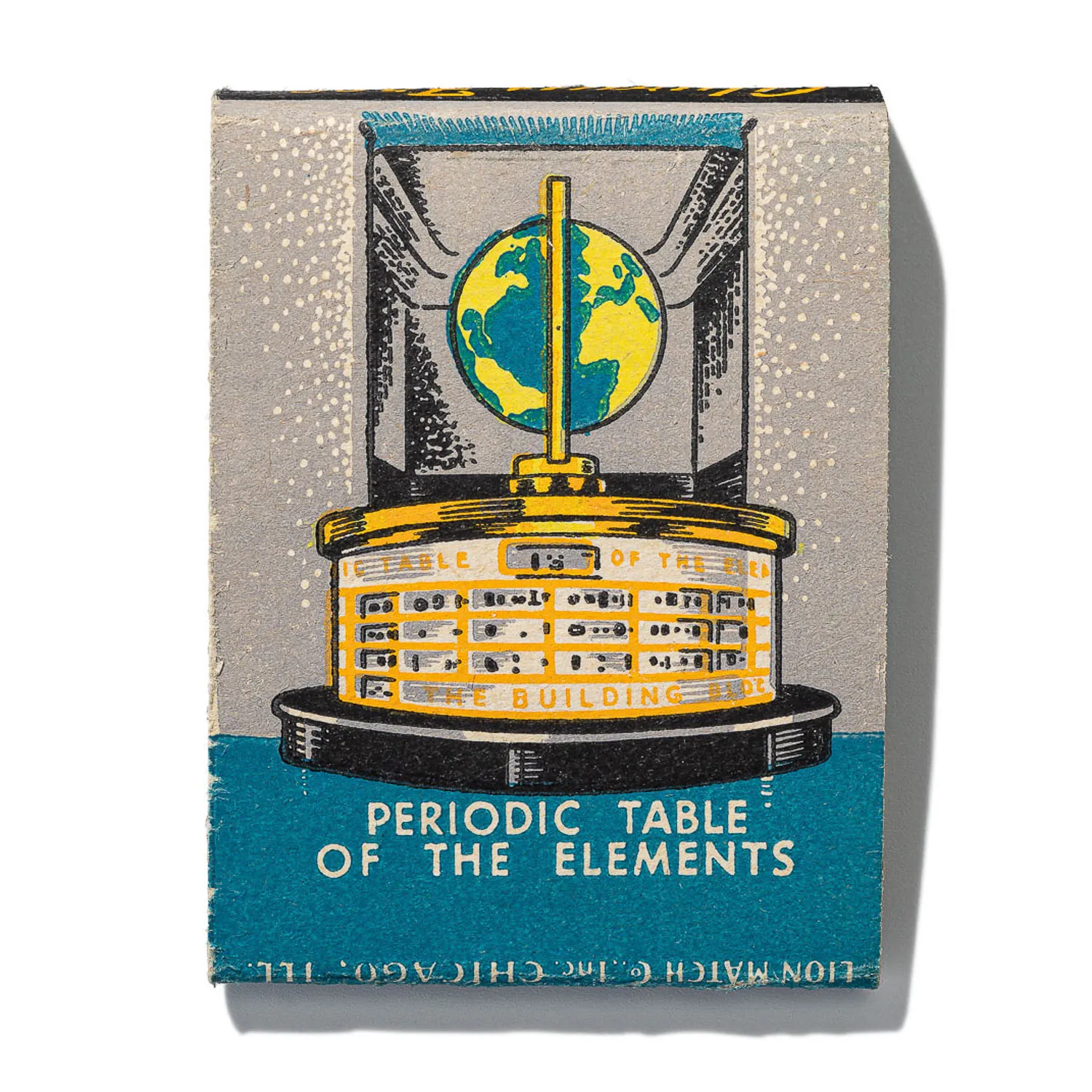
Because the covers were so cheap, they were also a place to experiment. Designers used bold color, Art Deco lettering, illustrated buildings, cartoon characters and pin-up art. Matchmakers added features to stand out: Lion Match Company introduced and trademarked "feature" matches, with the advertiser's message printed on the individual matches themselves, around 1935. Souvenir sets were printed for world's fairs, sports teams and city landmarks.
The cover had to work in a space smaller than a playing card: a name, a street address, sometimes a phone exchange, and one image. That constraint is a big part of why the designs hold up. There was no room for anything that did not matter.
What role did Chicago play?
Chicago did not invent the matchbook, but it became one of the places where the industry actually ran, and it kept making them after most of the country had stopped.
A manufacturing center. By the mid-twentieth century, Chicago was home to a cluster of matchbook makers, including Superior Match Company, Chicago Match Co., Match Corporation of America and American Match Company. Collector lists name more than a dozen other Illinois match firms over the years. Match Corporation of America billed itself in the 1950s as "The World's Largest Direct-Selling Book Match Manufacturer," with commissioned salespeople carrying sample kits and catalogs door to door.
Built for the small business. Superior Match, founded in the 1930s by Harold Meitus and based for decades at 7530 S. Greenwood Avenue in Grand Crossing, specialized in small orders of 2,500 to 5,000 books. That was the scale of the neighborhood tavern, the corner diner and the family-run motel: exactly the places most of these covers came from.
Cover styles that spread nationwide. Chicago firms introduced some of the most collected cover genres of the era. Superior launched its pin-up "Girlie" line in 1938, with sets by Gil Elvgren and George Petty. Chicago Match Co. introduced "Hillbilly" cartoon covers in 1948, and Superior's version, from 1949 to 1960, is regarded by collectors as the best of the type.
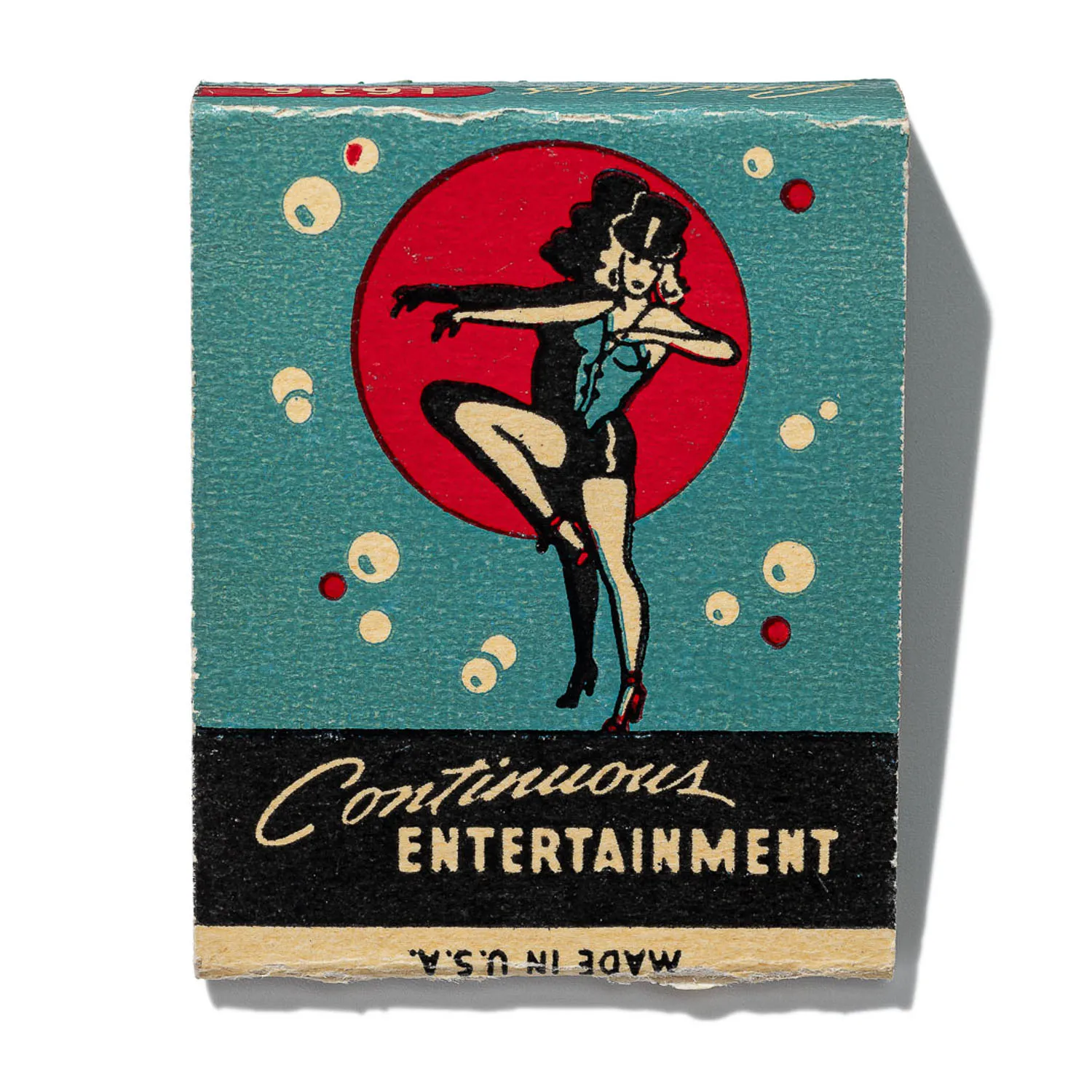
A city with plenty to advertise. Chicago's hotels, nightclubs, steakhouses and pizza places generated an enormous demand for covers. The big hotel rooms (the Palmer House's Empire Room, the Stevens Hotel's Boulevard Room) and freestanding clubs like the Chez Paree and Club DeLisa all handed out matches. Diamond printed a full souvenir series for the 1933 Century of Progress world's fair, now held in museum collections.
A real human cost. The work was dangerous. On December 16, 1937, a fire at Superior's first plant at 60 W. Superior Street killed six young women employees. A coroner's jury called the deaths accidental and recommended safer uniforms and one-story brick plants. Superior moved to Greenwood Avenue a few months later.
The last to go out. When the industry contracted, Chicago held on. In 1987, Richard Meitus told the Chicago Tribune that the American match industry had shrunk by about 90 percent since the early 1970s, and that of the six US manufacturers still operating, three were in Chicago. Superior's Chicago production site closed in 1990.
Why did matchbooks disappear?
Several things happened at once. Cheap disposable lighters replaced matches in pockets and purses. Anti-smoking campaigns, and later indoor smoking bans, took ashtrays off bar counters and restaurant tables. Labor costs rose and overseas competition undercut domestic makers. By the mid-1980s the American match industry had largely collapsed.
Most of the businesses on those covers are gone too. Many of the bars closed, the hotels were torn down or converted, and the phone exchanges printed under the addresses have not existed for decades.
The matchbooks survived in drawers, cigar boxes and collections. The Rathkamp Matchcover Society, the main collectors' club, counted more than 1,800 active members in 20 countries in 2005.
Why are matchbooks coming back?
Over the past decade, the matchbook has found its way back onto host stands and bar counters. Almost nobody needs them to light a cigarette indoors anymore. Restaurants hand them out for the same reason Pabst did in 1902: it is a small, cheap thing with your name on it that people carry home and keep.
The return started quietly. Some high-end restaurants brought custom matchbooks back as a retro touch in the late 2000s. By the mid-2020s it had become a visible trend. In November 2025, Salon described restaurant matchbooks returning as "collectible keepsakes and design objects," pointing to places like Funke and Osteria Mozza in Los Angeles and Seneca Trattoria in San Diego, whose matches carry gold-foil lettering. The same piece mentions one New York collector who has mapped about 450 restaurants, shops and hotels in that city that give out branded matches.
Younger diners are a big part of it. In June 2026, Bloomberg reported that Gen Z and millennial customers at Wild Cherry, a bar in New York's West Village, ask for matchbooks on their way out, and Marketplace, discussing that report, said matchbook sales had grown about 75 percent a year for three years. The reason given is the same one behind film cameras and vinyl records: people want a physical souvenir of a night out, something a phone photo does not quite replace.
For a new business, the logic has not changed in more than a hundred years:
- It is cheap. A matchbook costs a fraction of most printed promotions, and much less than a month of social media ads.
- People keep it. A digital ad is gone in seconds. A matchbook sits in a pocket, a bowl or a junk drawer for months.
- The cover is the brand. Restaurants now hire artists and illustrators for their covers, the same way mid-century clubs did, and the best ones get photographed and shared online.
- It is a story people pass on. A matchbook on a coffee table is a conversation about where it came from.
Chicago is part of it again too. In December 2024, the matchbook newsletter Oh, What a Match! published a Chicago guide to restaurants and bars handing out matches, and asked readers to send in more. Some of the places from the old covers are still open too. Gene & Georgetti has been serving steaks on Franklin Street since 1941, and its vintage matchbook is in this catalog.
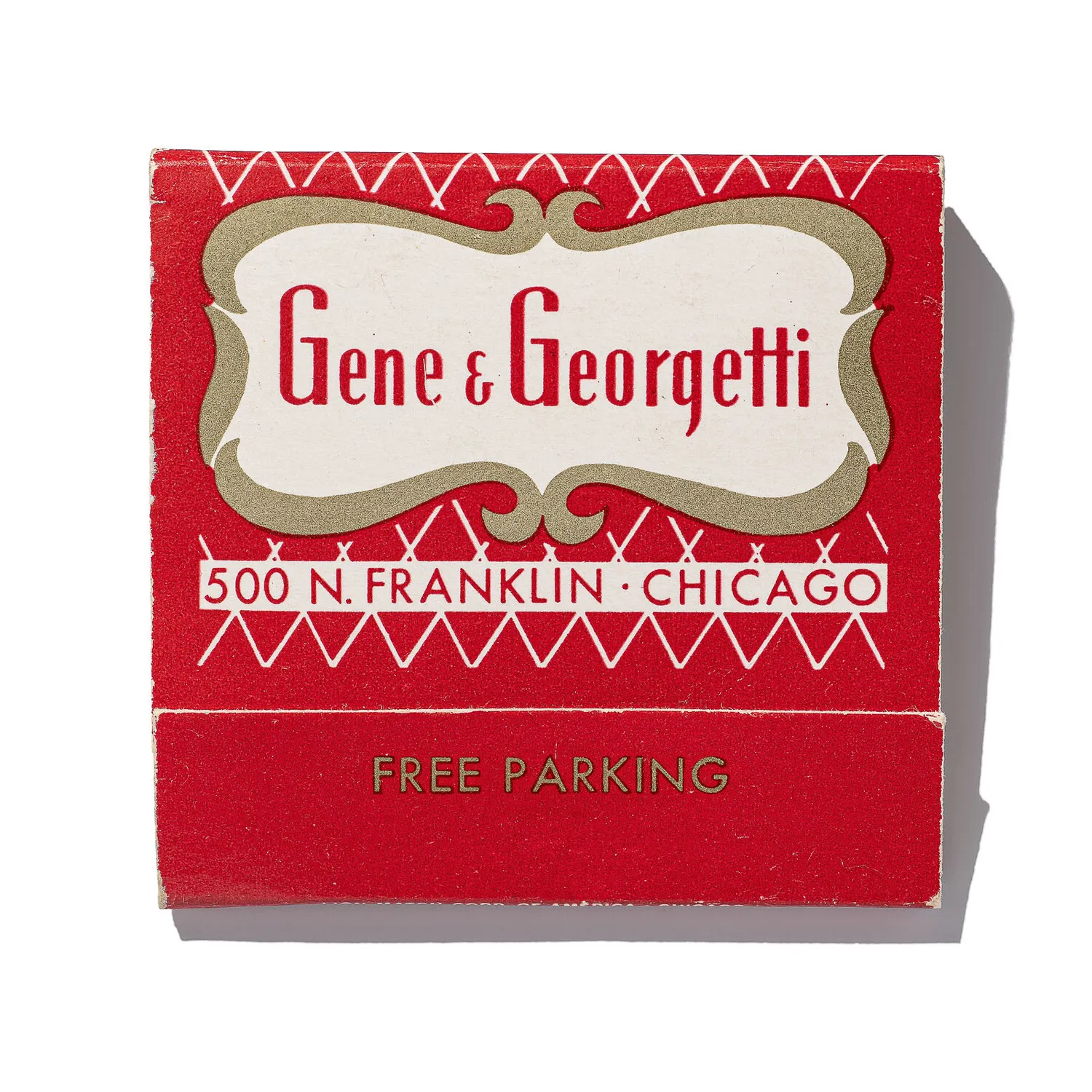
The new covers will become someone's vintage find in fifty years. The old ones are already here, and most of the places they advertised are gone.
Why I photograph them
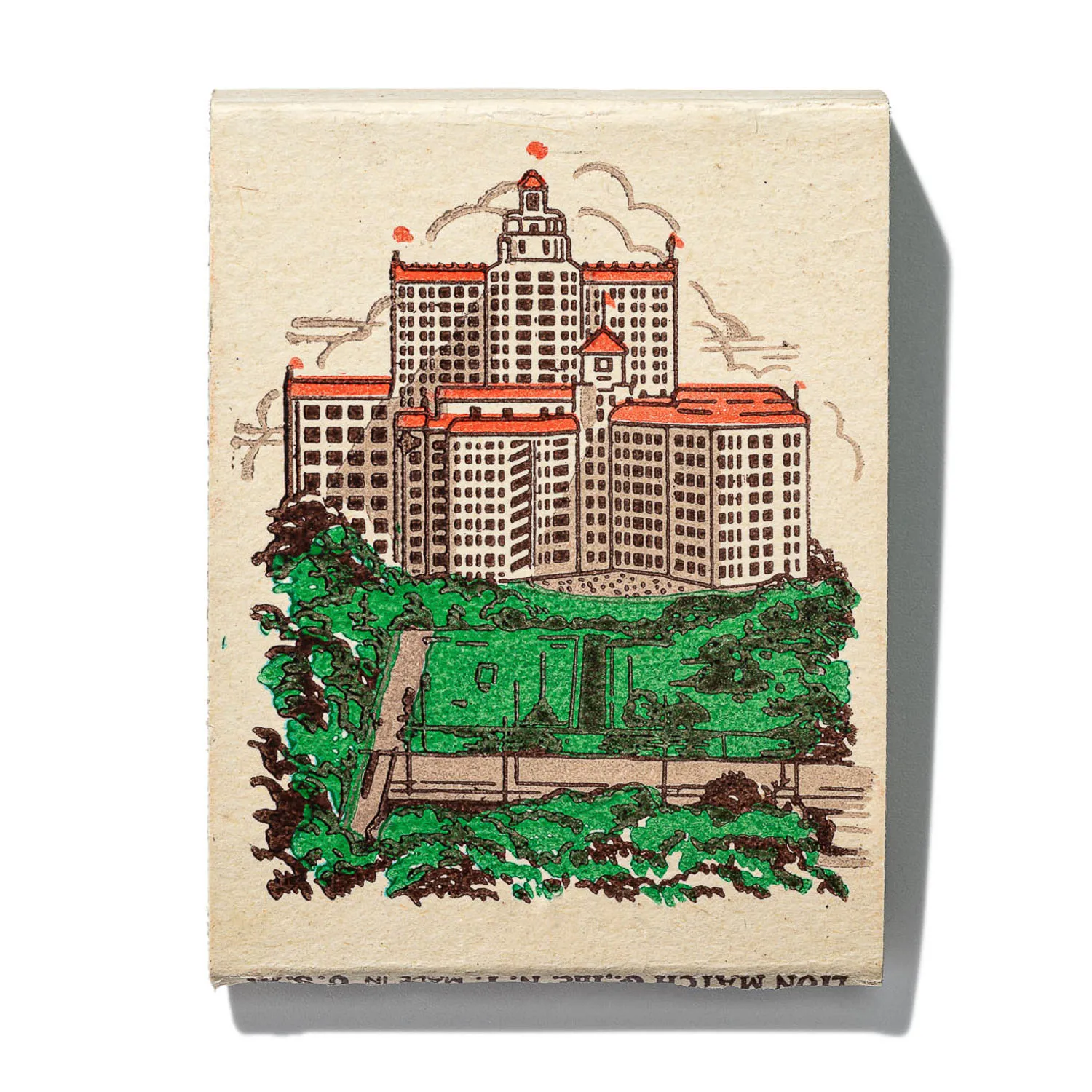
Every print I make starts with a real Chicago matchbook I found and kept. I shoot each one in my studio in West Town, lit to bring out the paper's texture, the printing, and the wear from years in someone's pocket.
I do it because a matchbook is often the best record left of a memorable spot. A photo of a bar shows you the outside. A matchbook shows you how the place wanted to be seen: the lettering it chose, the slogan, the drawing of its own front door, the phone number you would have dialed. These were made to be thrown away, which is exactly why so few are left, and why they are worth photographing and printing large enough to see the details.
If one of these places means something to you, a bar you went to, a hotel your parents stayed in, a restaurant two blocks from where you grew up, the full catalog is here.